

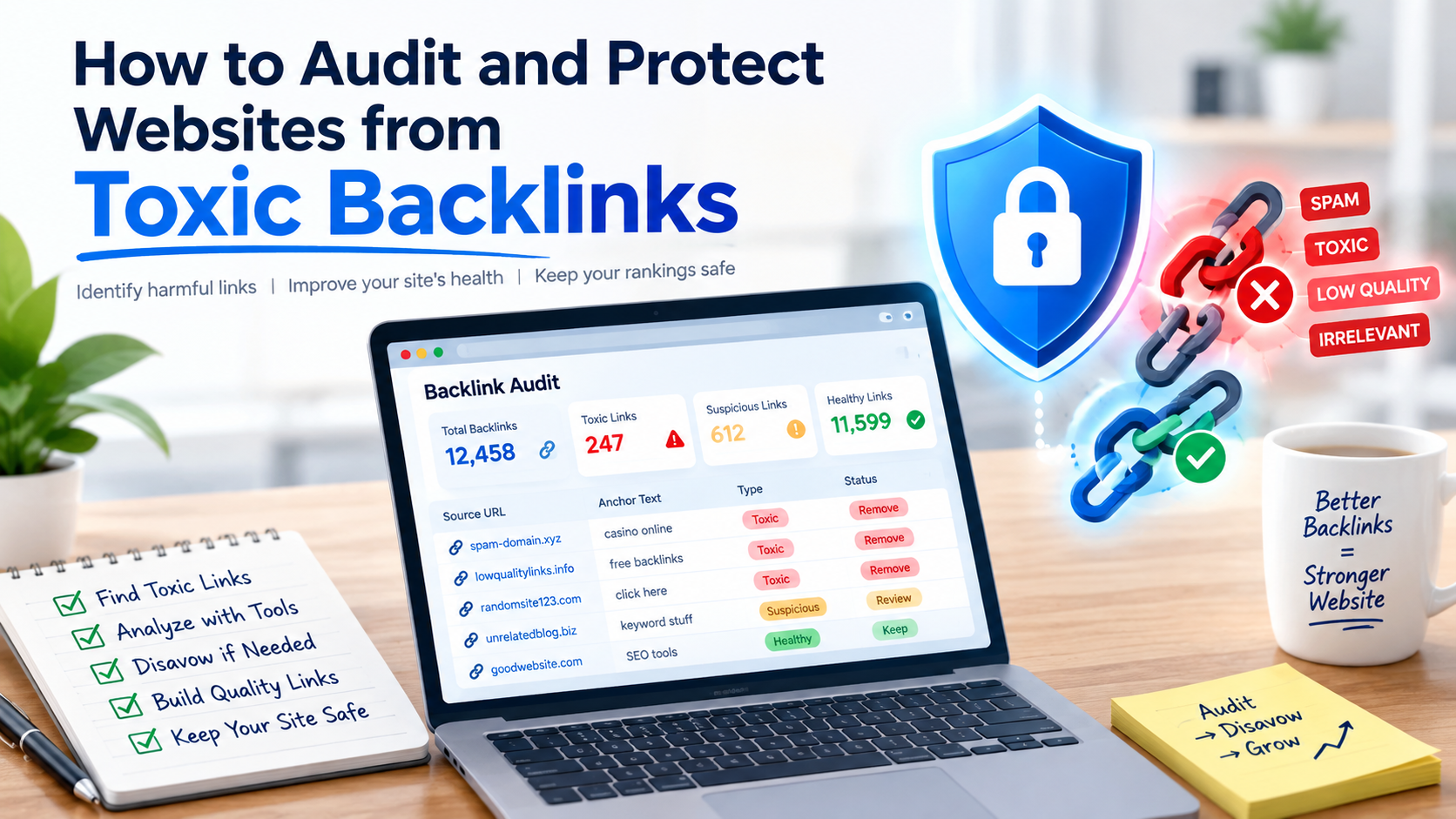
There is no doubt that a strong backlink profile can significantly boost your website authority and SERP visibility. However, it is also true that not all backlinks are created equal. Quality links carry excellent SEO weight, whereas toxic links can hurt the overall performance instead of improving it.
Toxic links are the ones that come from irrelevant, spammy, and low-quality sources, giving an unnatural look to both the audience and search crawlers. While not every backlink coming from a low-quality site is harmful, a backlink profile filled with several toxic links is dangerous.
In today's blog post, we explain how you can audit and protect your site from such links. So, keep reading to learn more.
Steps to Audit Your Site for Toxic Backlinks
Below, we have discussed the steps for effectively auditing your website for toxic backlinks.
1. Collect Backlink Data
The first step for auditing backlinks is to gather data about all the links that are pointing to your website. This is important because you need to know which sources are linked to your website before actually deciding whether they are toxic or spammy.
Now, the question is how you can gather backlink data for a website. The answer is by using specialized backlink analysis tools. On the internet, there are numerous platforms available that help perform a thorough link audit. One popular option is Ahrefs.
It will help you quickly identify:
- Total number of linking domains
- Anchor text
- Link attributes (do-follow or no-follow)
Once you have all the backlink data, it is time to start reviewing the linking domains to identify the toxic ones.
2. Evaluate the Quality of the Linking Domain
There is no single factor that makes a backlink toxic. Instead, there are multiple metrics or signals that come together to decide whether a linking domain is credible or spammy.
So, use the data gathered about linking domains and start evaluating their quality by considering the following factors:
Niche relevance:
Check whether the linking domain is relevant to your industry, topic, or target audience. Toxic links usually come from totally irrelevant domains. Suppose your website is about digital marketing, and it receives a link from an automobile repair site; this may look unnatural, increasing the chances of toxicity.
Content quality:
Examine the content to determine whether the linking domain hosts original and valuable information or appears to have been created just to publish sponsored content. Websites covering irrelevant topics, containing excessive advertisements, and having large numbers of outbound links are more likely to be spammy and low-quality.
Spam score:
Spam Score is a third-party metric that indicates how closely a domain resembles sites with characteristics associated with penalized or banned sites. It is expressed as a percentage on a scale ranging from 1% to 100%. The higher score suggests that the site shares more characteristics associated with spammy or penalized sites. You can easily evaluate the spam score of any linking domain by using a spam score checker. Simply enter the URL, click the button, and review the score.
Manipulation signals:
You should also review the linking domain thoroughly to look for search manipulation signals. The most common checks to look for are:
- Excessive outbound links
- The referring domains share the same IP address
- Hidden links
- Dedicated pages asking for link collaboration
Evaluating the quality of the linking domain using all these factors can provide you with a good idea of whether the site is genuine or spammy.
3. Check the Relevance of the Linking Page
An entire website is not always irrelevant. Sometimes only the specific page from which the link comes is low-quality. That's why you should consider the topical relevance of the page.
Search engines like Google usually prioritize backlinks that come from pages that cover topics similar to yours. These appear more natural, credible, and valuable to the crawlers.
On the other hand, receiving a backlink from a webpage that covers a different topic or context may look unnatural and forced, as there will be no logical connection between the content and the link pointing to your website. So, search crawlers may consider them spammy and low quality, increasing the chances of algorithm penalties.
Note that relevance alone does not guarantee that a backlink is toxic. However, it can help you understand whether the backlink appears unnatural or suspicious.
4. Analyze Anchor Text and Unnatural Link Patterns
Last but not least, analyze the anchor text used in the backlinks received from external websites.
Try to look for patterns that appear unnatural. If links come from irrelevant phrases, repeat the same anchor across numerous linking domains, or show other unnatural patterns, these are suspicious. Google may treat such patterns as an attempt to manipulate the search rankings when they are part of an artificial or manipulative link scheme.
On the other hand, good backlinks usually contain a variety of anchor text types, including branded, descriptive, and URL-based anchors. The variation helps them appear natural, contextual, and valuable.
Besides anchor text, you should also look for unusual link patterns within the backlink profile, such as:
- Sudden surge in backlinks
- Several links coming from the same group of websites
- Sitewide link appearing across hundreds of pages
These unusual patterns can also help you spot toxic or spammy backlinks.
Approach for Safeguarding Your Website Against Toxic Backlinks
Here is how you can protect your website from toxic backlinks.
1. Contact Site Admin/Owner for Link Removal
One of the most effective ways to protect your website from harmful links is by contacting the linking domain admin and requesting removal. Usually, most sites mention contact information in their:
- Contact pages
- Header and footer
- About Us pages
So, you can review the linking domain thoroughly to gather contact details. After this, create a message requesting specific link removal. Keep your message specific, concise, and professional. Do not forget to mention the specific page and the spot where the backlink is added for additional clarity.
You should only request removal of backlinks that you genuinely find toxic, spammy, or irrelevant. As mentioned earlier, not every link from a low-quality or low-authority site can be considered harmful.
2. Use Google Disavow Tool
In case you are unable to get the toxic backlinks removed, then consider using Google's Disavow Tool. It allows owners to ask Google to ignore low-quality or spammy links when evaluating their website for rankings.
For this, you need to create and submit a properly formatted .txt file containing the links you want Google to ignore. Below, we have listed the procedure:
- Go to Google's Disavow Links Tool
- Choose your website property from the list
- Upload and submit the .txt disavow link file from local storage
However, you should use this tool carefully. This is because incorrect disavowing of legitimate backlinks can prevent your website from ranking well.
3. Keep Monitoring Regularly
Auditing, removing, and protecting your site from spammy backlinks is not a one-time task. This is because toxic links can appear anytime. That's why a wise approach is to keep monitoring the backlink profile regularly.
This way, you can quickly identify harmful patterns or changes before they negatively impact your site's overall performance. So, decide on a specific timeframe (weekly, biweekly, or monthly) for analyzing backlinks.
Bottom Line
Toxic backlinks can significantly damage your website's authority and overall SERP visibility. For this reason, it is crucial to audit and remove these links before they damage performance. In this blog post, we have explained a step-by-step procedure for conducting a thorough backlink audit. Along with this, we have also discussed ways to protect your website from toxic links.